Experienced on – March 2020 – April 2023
Published on – 3rd March 2025
Mentally I was doing better, but physically I was still struggling. I constantly felt like I was swimming against the current.
As 2020 arrived it was clear that I couldn’t keep doing what I was doing. I was spending all my energy on a job that no longer brought me satisfaction, and I was stuck in a cycle.
With ME/CFS there is a certain nobility and necessity to accepting the cycle you’re in and embracing it. But that lesson was to come, and at the beginning of the year I still yearned for more.
The process of applying and interviewing for jobs is exhausting even for the healthiest of people. Then add in the fact that face to face interviews were still the norm.
I would finish up at work, hop onto a train, then focus on being the best version of myself when I would usually be curled up in a dark room. I knew it would take its toll, but I saw it as a necessary evil.
In one interview the guy kicked it off by telling me that he ‘preferred hiring women’. He then rambled on for 15 minutes, cutting me off at every opportunity. After the interview he told my recruiter that I lacked ‘curiosity’ and I ‘didn’t show enough passion for the role’.
But then I found one role which seemed perfect for me. The size, the vibe, the office and the ambition of the agency was exactly what I was looking for.
Four interviews down and they notified me that they’d be sending an official offer soon.
And so, I faced the dilemma that every disabled working person faces. Should I tell them or not?
Now legally I was protected under the Disability Act. I didn’t need to tell them until it became an issue. But for me, I felt that honesty was the best policy.
As expected, my prospective line manager didn’t know what ME/CFS was and was nervous of saying the wrong thing. They told me that this would be discussed internally, and they would come back to me.
Six days passed and no word. My recruiter insisted that I shouldn’t have told them, he knew his finder’s fee was in jeopardy now.
Eventually I received a call telling me that the offer had been pulled, and they were no longer filling the role. I was devastated, the energy I had put into it, the feeling that this was the perfect next step for me. And all because I decided to be honest.
I asked my recruiter if they could legally do this, instantly annoyed at myself for telling them over the phone and leaving no paper trail. He told me that their official line was that they were growing concerned by the situation in China and wanted to wait a few months before filling the role.
Weeks passed, and their excuse looked better and better. The global economy started to slow down, and the world was set to change. I was stuck, for better or worse.
I only really started to understand my illness when the COVID lockdown hit. It’s a strange thing to say, but it was a blessing for me.
Now, the whole world had to slow down to my pace, it forced me to take the necessary steps to reset my body and recover.
I was still working, making less money than those on the furlough scheme, but working from home revolutionised how people with disabilities were able to cope.
And with my partner, I was allowed the space to recharge so I could give her the attention and love that she deserved. At the end of 2020, my condition seemed to be improving, and I decided to move into her house.
Each day I could feel it all coming back. I now felt like I was running against the wind, rather than a brick wall.
The next two years or so were the best time of my life. I had recovered to the point of being completely mild, though I would classify myself as in remission.
My illness felt like a distant memory at times. It still hung over my head, but less like Damocles’ sword and more like a blunt kitchen knife.
In my newfound health, I deserted the ME/CFS community. I didn’t look for any mention of it in the news, I didn’t seek out the latest white papers, and I didn’t contemplate how or why I was better. I just was.
But that feeling of appreciation for a second chance started to fade quickly, and other struggles entered my life.
There’s two days when you have a chronic illness, this day and the next. It becomes virtually impossible to look beyond that and anticipate how you’re going to feel. Now, I had to think further ahead.
At a new job, I was traveling a lot more. Spending around 12 hours a week on trains.
My friends and former colleagues were moving up in the world, while I was plateauing. I pushed more and more, telling myself, “Just this one promotion and that’s it; I can coast after that.”
I stopped being patient, I stopped listening to my body. And the inevitable happened.
It wasn’t as immediate this time. I could feel my body getting wearier and wearier, though I struggled on like a giant with his feet tied together.
I was on a work trip when I got promoted and I couldn’t celebrate. I knew my body well enough to know what was coming next.
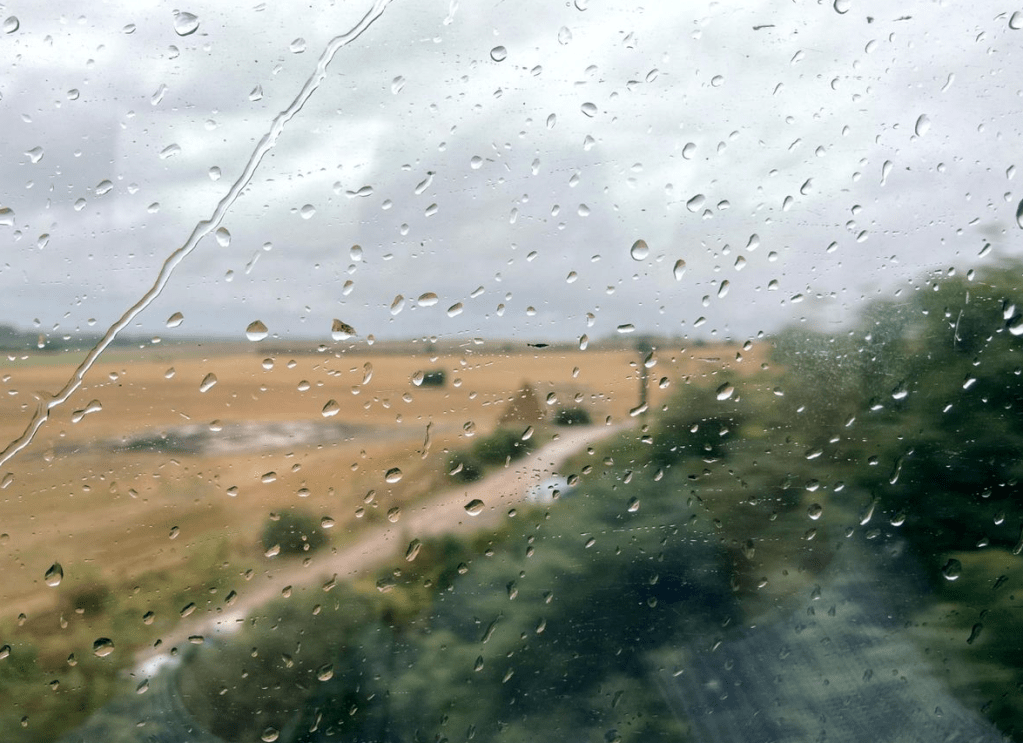
On the train home I looked at the window, it was a sunny day, but remnants of last night’s downpour remained on the glass. As the train set off, the raindrops streamed past me like shooting stars.
But one droplet stayed put. I watched it for a while, trying to work out if it was stuck or if it was holding on.
A few days later, the crash came.
A crash so devastating that I had unlocked a new level of this illness.
I spent the next fourteen months with severe ME/CFS, mostly being unable to leave the house and, some days, my bed.
My relationships with the people around me shifted, I had to rely on them just to exist.
I blamed myself, furious for falling into the trap and being worse than ever. But I knew guilt and anger were merely a waste of energy for me now.
All my focus had to go again on getting through this day, and the next. With the hope that eventually, an improvement would come.
 LIFE IN A CRASH