Originally experienced – 19th June – 28th September 2019
Published on – 2nd March 2025
A year had passed since my diagnosis, and the only thing my doctors had done was send me a book titled Living with ME.
I would lie in my room, wilting away, staring at the book. I wrote in my notes around that time, “Living with ME? This isn’t living. This is surviving.”
And that was true—most days, it was just about getting through it.
Having suffered for over a year, I was now technically disabled in the eyes of the law (under the Equality Act of 2010). But at the time, I would never have used that word to describe myself.
I was still somehow managing to work and bring home a salary. I could still do a lot of the things I did before. I still had independence.
And most fundamentally, in my mind, I didn’t look like a disabled person.
Now, I know today how stupid that opinion was. But in my 20s, invisible disabilities weren’t something I really understood. Despite the struggle, on the outside, my appearance hadn’t changed.
I had trouble reconciling these two things.
I made the conscious decision to only tell the people I really had to. I feared being defined by my illness. In my mind, I wanted to carry on as if nothing had changed.
At work, I told the owner of the company and the office manager.
The office manager was a sweet older lady whom I’d often help with odd jobs. These included lifting big packets of paper or running down two flights of stairs to get the post—tasks that you wouldn’t think twice about. Though tasks I no longer had the energy for.
Other people had to pick up the slack, and they would look at me in confusion, never offering to help. But while everyone was looking at “the same old Kyle,” I felt like a completely different person.
One morning at work, I was in early when I heard a scream from another room. I’d never heard a scream like it before and haven’t since. It was like the Wilhelm Scream, with even more desperation thrown in.
I ran around the corner and found a printer repairman writhing on the floor in total agony. He’d bent down, and something in his back had gone. We later found out he’d broken two vertebrae.
Two paramedics arrived quickly, but since he was a large man, they needed support to lift him down the stairs.
The time was 8.30am, hardly anyone was in, so the paramedic looked at me for help.
Frozen and embarrassed, the office manager jumped to my rescue, telling them I had an important call and that someone else could help.
I felt complete shame as I held the phone to my ear, pretending to be on a call, while one of my female colleagues assisted the paramedics.
I felt awful, but I kept telling myself I would have felt worse if I had helped. Any overexertion could bring about a crash. It’s why exercise is completely off-limits and why even getting out of bed can some days be too much.
I had to be selfish and think of myself, but it didn’t make the guilt any easier.
And things like this seemed to happen all the time. People would look at me as a healthy young man, unaware of my invisible disability.
Once, on a snowy day, I was walking home from the bus stop when a car got stuck in some slushy ice. A pedestrian walked behind the car and started to push, then turned and asked me to help.
Another day, while walking to my local shop, I saw a tussle about 25 meters ahead, and a man was running towards me, holding multiple packs of meat. Two shop workers in burgundy followed behind, shouting at me to stop him.
Then another time, by a swimming pool, I asked a man who was blaring dance music from his portable speaker to turn it down. The guy stood up, walked towards me and then asked if I wanted to fight.
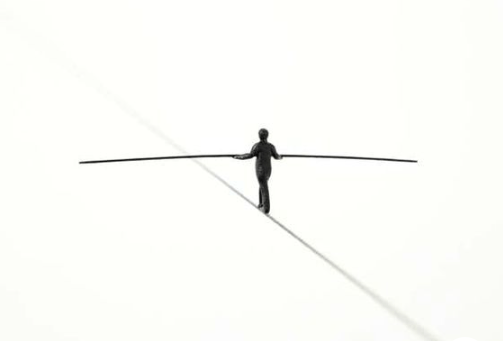
I walked a tightrope, knowing that any one of these situations could have caused PEM (Post-Exertional Malaise) and made me feel horrific. PEM can also set you back months in your recovery, edging you closer to another crash.
So, what did I do?
I said no to the compassionate pedestrian in the snow.
I ignored the meat thief and the burgundy workers.
And I let down all the sunworshippers by the pool and said, “I’m okay, thank you,” to the fight inquisitor.
But I didn’t stop and give each person a lengthy explanation. I just tried to get on with my day and not make any of my symptoms worse.
After one particularly intense day of work, I could see my bus arriving in the distance. I chased after it, waving to the driver in the rearview mirror. Luckily, he stopped, and I hopped on.
Though when I sat down, I started to feel it.
Everything was vibrating. It felt like there was zero gravity, my brain doing those slow somersaults you see astronauts do. But my physical body was cemented, sunk into the seat.
We arrived at my stop, but I couldn’t move.
I felt completely powerless as I watched stop after stop go by, getting further away from my destination. All I could do was hope that I had the energy to get off, on the next go-around.
Each day was a balancing act that would end with me crawling into bed to reflect on how I could have conserved more energy.
There’s a certain level of disability or illness that goes completely underappreciated in society, and that’s those who can still technically work but do nothing else.
Stuck in a cycle where every single drop is spent at your job, no energy to do anything outside your 9 to 5.
I didn’t understand how I could ever get out of this trap, what my exit route was.
But then a letter arrived, and a new world opened.
 LIFE IN A CRASH