Experienced on – May 2024 – Ongoing
Published on – 3rd March 2025
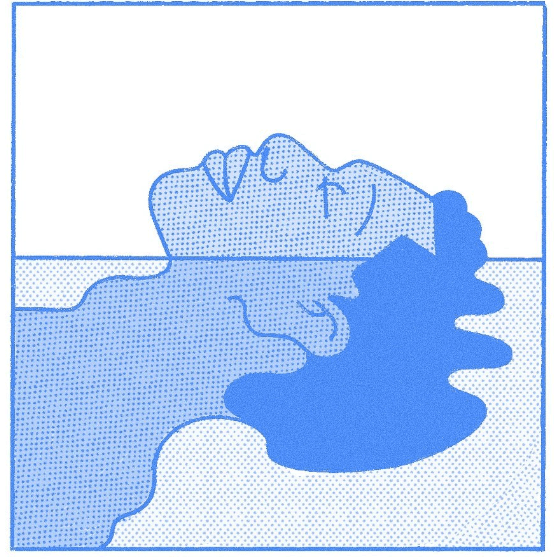
The months that followed were repetitive.
When you have an isolating chronic illness like ME/CFS, there’s not much you can do, you’re in these shackles that seem to never loosen. You never get that ‘Cinderella Moment’, you are always figuratively scrubbing floors and locked inside with your bitchy sisters.
While there is no cure or effective treatment plan for ME/CFS, there are plenty of theories on what could make you better. I’ve read every single ‘recovery tale’, angered by their preachiness but envious of the results.
These theories also often come from quacks, people who’ve misdiagnosed themselves with ME/CFS, and the lucky minority who seem to recover.
I had been reluctant in the past, but I knew I had to give anything a try, desperate to find a quick fix.
Acupuncture
I lay still as my acupuncturist inserted 25 needles into my body.
I tried to make small talk, asking him how he got into acupuncture. He told me that back in the ’90s, he used to smoke two packs of cigarettes a day. After one acupuncture session, he completely quit. The experience sparked his interest in acupuncture, so he quit his high-paying job in finance and became a master of needles.
It was an incredible story, one that made me trust the person slowly stabbing me.
Fifteen minutes into the session, I felt the faintest itch on the inside of my nostril. I tried to resist the urge, but eventually, I gave in and moved my hand towards the itch. My acupuncturist jumped up, alarmed.
“Stop! You mustn’t move at all; any sudden movement could cause the needles to rip a tendon.”
That would’ve been nice to know at the start of the session. Still, it gave me an insight into just how delicate this procedure really was.
When I booked my acupuncture session, his homepage featured a blog post about a female footballer who was forced to retire after an acupuncture procedure punctured her lung. The blog criticized the physiotherapist who administered the needles, stating that acupuncture should only be performed by a trained professional.
That story didn’t exactly fill me with confidence.
It would be like visiting British Airways’ website and immediately reading about a recent plane crash that killed hundreds—only to be reassured by the fact that it wasn’t a BA pilot.
I finished the first session with all my tendons intact and told him I’d get in touch to book the next.
A week later, I received a call from him saying he was unwell and needed to postpone our appointment. I thought nothing of it and rescheduled for a week later.
Two days after that, I received a text from him saying “NSHFJNG.” He followed it up, claiming his “fat fingers” were to blame. Those same fat fingers I was putting my trust in.
With every new exchange I wanted to cancel, but I was trying hard to be less cynical.
However, when I saw someone who looked remarkably like him chain smoking a pack of cigarettes, I decided acupuncture wasn’t for me.
Brain Retraining
I would never recommend this to anyone, but I had saved money specifically for recovery and was incredibly curious. Brain retraining is something many ME/CFS recovery stories include, especially from “Illness Influencers.”
Each piece of content comes with a discount code and a knowing wink.
It was an American website I decided to try, and during my first session, I nearly burst out laughing at the “English” accent my “mentor” was attempting. Think Don Cheadle in Ocean’s Eleven.
She kept saying phrases like Dynamic Neuropathic Clarification, and I think it took three attempts at saying Peripheral Neural Interchanges before I completely checked out.
At one point, while trying to reprogram my mind, I started to fear that she might try to “Manchurian Candidate” me. I imagined waking up in a prison, wanted for the murder of Oprah or Justin Trudeau.
I’ve never been one to knock what works for others on their road to recovery, but some of the pseudoscience bullshit I had to listen to was astounding. It had no relevance to this illness and should be treated with contempt.
Cold-Water Therapy
This was a trendy form of treatment being touted as the cure for everything. While I can’t speak for its overall effectiveness, I did enjoy it quite a bit.
Chronic illness stagnates you, and it can be incredibly frustrating when you don’t seem to be making progress. So, I found that making small gains anywhere was essential. That might be getting to a new level on a video game, making progress on a knitting project, or for me, lasting longer in ice-cold conditions.
I moved from cold showers to purchasing my own inflatable plunge pool. It cost me only a tenner because it had branding from Aquaman 2 all around the outside—a film I didn’t know existed until I found myself inside its merchandise.
After hitting the optimal time of five minutes at 5°C, I stuck with it for a few months before growing bored of not seeing results. And struggling to maintain a cold temperature without bankrupting myself on ice.
It did make me check out Aquaman 2 though! (Not really).
Vagus Nerve Transmitter, Red Light Therapy, Hyperbaric Oxygen Therapy, Craniosacral Therapy, Lymphatic Drainage
These were all expensive to do regularly and properly. A short trial of each didn’t prove effective for me, but again I have heard success stories.
Cocktail of Drugs
I tried different types of vitamins, at one point taking 16 a day. I experimented with one at a time to try and figure out what was and wasn’t helping. However, I found it impossible to distinguish between the benefits and what was either a symptom of ME/CFS or a side effect of the specific pill/medicine.
I took pills that made me hungry, pills that meant I didn’t have to eat for days. Pills that brought about rashes, pills that made my hairline recede (well I’ve got to blame it on something).
Months of my life were devoted to trying pills that I was told would make me feel worse before I got better. I’d stick with it, write a diary of how I felt after each dosage and still had no way of knowing whether it was helping or hindering.
Nicotine or LDN (Low-Dose Naltrexone)
Medical help is extremely limited when you have ME/CFS, and every potential cure or way to manage your symptoms was discovered from forums or peer-to-peer advice. I would have routine appointments with my GP, practically begging for help—asking if there were any new studies or medicines to try. The answer was always no.
I was referred to a specialist ME/CFS Clinic in London. That was 16 months ago, and I still haven’t had an appointment.
I eventually found it was better to have a malleable GP rather than a good one. I could go in with my own research and requests, and they’d only need to sign off on them. This helped me to be referred to numerous specialists and request specialists diagnostic tests, but still nothing was helping.
At the time, the two treatments that seemed to be having the most success amongst sufferers were Nicotine and Low-Dose Naltrexone (LDN).
Nicotine was a strange one. Some people had found that nicotine patches (the ones used to stop smoking) helped manage a range of symptoms and provided patients with more energy. I had avoided smoking my entire life, and now I was being told that nicotine could be the solution.
The other option was a drug called Low-Dose Naltrexone. It had limited side effects and was used to treat MS, Crohn’s Disease, and other painful conditions. I did my research and learned that LDN required six months to show any benefits, so I felt it was worth a try.
I had to find a questionable pharmacist in the backwaters of Scotland to give me an online prescription, and I was ready to start.
Before I did, I conducted more research. I learned the best time of day to take it, the possible side effects, how to titrate up the dosage, and how to monitor its effectiveness.
But the one thing my detailed research missed was that LDN was also prescribed for fertility. A quite significant oversight.
 LIFE IN A CRASH